Safety audits & inspections
Structured jobsite safety audits nationwide, with consistent checklists and a distributable PDF report. First Link Safety walks findings with your supers on site, with no surprise gotchas on the page.
WHAT WE DO
Structured audits with findings you can use
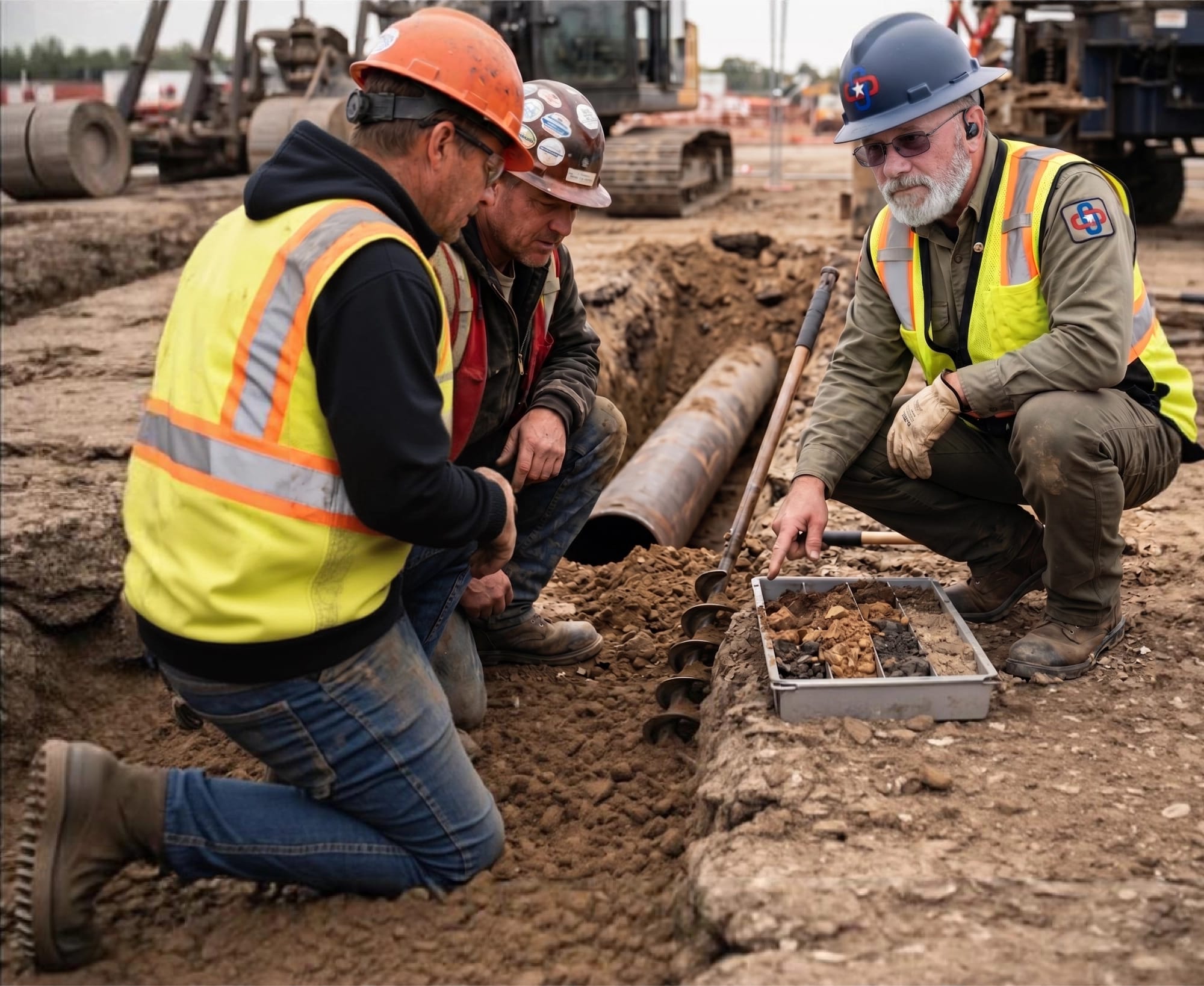
We walk your jobsite with a consistent checklist, coach your crew as we go, and deliver a PDF report your team can use on the floor, with trade partners, and in the file if someone asks later.
This is not a compliance-only visit where someone marks boxes and disappears. We are there to help supers and foremen see what we see, agree on priorities, and leave with a clear picture of what “good” looks like on the next walk.
Audits run through SafetyCulture (or similar workflows) so checklists stay consistent visit to visit and you get a report you can distribute without reformatting. Clients use the PDF as proof a crew is performing when everything looks good, or as a dated record when something needs follow-up with subs and owners.
WHAT WE LOOK AT
Three layers, one coherent picture
A useful audit connects what is happening in the field to what is on paper. We walk all three layers on every structured visit, and we can narrow scope if you only need one slice for a targeted project.
Field conditions
What crews are doing right now: PPE, housekeeping, equipment, and work practices.
Field conditions
What crews are doing right now: PPE, housekeeping, equipment, and work practices.
On the walk
Walk-through · Active work zones
Fall protection in use, trench boxes and shoring, MEWP and forklift operation, hot work, and housekeeping that affects trip and fire risk.
Equipment · Gear on the floor
Ladders, rigging, fall arrest, fire extinguishers, and temporary power: inspected, tagged, and being used the way the manufacturer intended.
Culture · How the crew works
Pre-task plans happening before work starts, supers engaged, and corrections handled as coaching instead of write-ups for the file.
Documentation & records
The paper trail that backs up what we saw in the field.
Documentation & records
The paper trail that backs up what we saw in the field.
On the walk
Training · Certs and matrices
Operator cards, competent-person designations, first aid/CPR, and site orientations, matched to the people doing the work.
Chemicals · HazCom & SDS
SDS access, labeling, and inventories aligned with what is on site today, not what was true when the manual was first printed.
Logs · Inspections & incidents
Equipment inspection records, near-miss reports, and anything that should tell a consistent story if OSHA or your carrier asks.
Programs & plans
Written programs that match how your operation runs.
Programs & plans
Written programs that match how your operation runs.
On the walk
Site-specific · Plans for the job
JHAs, pre-task plans, emergency action, and trade-specific programs tied to the hazards on this project, not a generic binder.
Standards · What good looks like
For every finding, we spell out the fix, who owns it, and what “passing” looks like on the next walk.
Partners · Subs & owners
Findings you can share upstream and downstream: documentation that a crew is performing, or a clear record that an issue was already raised.
On the walk
Field conditions
Walk-through · Active work zones
Fall protection in use, trench boxes and shoring, MEWP and forklift operation, hot work, and housekeeping that affects trip and fire risk.
Equipment · Gear on the floor
Ladders, rigging, fall arrest, fire extinguishers, and temporary power: inspected, tagged, and being used the way the manufacturer intended.
Culture · How the crew works
Pre-task plans happening before work starts, supers engaged, and corrections handled as coaching instead of write-ups for the file.
On the walk
Documentation & records
Training · Certs and matrices
Operator cards, competent-person designations, first aid/CPR, and site orientations, matched to the people doing the work.
Chemicals · HazCom & SDS
SDS access, labeling, and inventories aligned with what is on site today, not what was true when the manual was first printed.
Logs · Inspections & incidents
Equipment inspection records, near-miss reports, and anything that should tell a consistent story if OSHA or your carrier asks.
On the walk
Programs & plans
Site-specific · Plans for the job
JHAs, pre-task plans, emergency action, and trade-specific programs tied to the hazards on this project, not a generic binder.
Standards · What good looks like
For every finding, we spell out the fix, who owns it, and what “passing” looks like on the next walk.
Partners · Subs & owners
Findings you can share upstream and downstream: documentation that a crew is performing, or a clear record that an issue was already raised.
Need a one-time baseline before you bid a job? A quarterly cadence inside a retainer? A focused walk after a near miss? We scope the audit to the trigger: same structured approach, sized to what you need.
WHY AUDIT WITH US
Findings you can act on
The most common gap we find is not an obvious hazard on the floor. It is training that happened informally but never made it to the record. Once it is on paper, supers can reference and enforce it, and you are not scrambling when a GC, owner, or OSHA asks for proof.
Two rules we hold ourselves to on every audit. First, nothing on the report should be a surprise: we discuss anything tagged negative with supers and the people involved before we write it up. Second, every finding comes with what “good” looks like for the next walk: not just “fix this,” but a picture of the standard you are aiming for.
Unlike a one-and-done compliance visit, we are field-raised safety people who have run crews and stood on jobsites like yours. We speak the language of supers and OSHA alike, and we know when a correction is a five-minute fix versus a planned out program shift.
A REAL EXAMPLE
Training that happened, but wasn't on paper
On a recent walk, the crew was doing the work safely. Fall protection was in use, pre-task plans were happening, and the supers knew their people. But when we pulled training records, several operator cards and site orientations could not be matched to the workers on the floor.
That gap would not show up in a hazards-only walk, and it is exactly what gets scrutinized when a GC audits subs or OSHA asks for documentation. We flagged it on site, helped the team close the records the same week, and the PDF became proof for the owner that the issue was caught and fixed before anyone else asked.
HOW IT WORKS
From the first call to a report you can share
Step 1: Scoping call
Tell us about your sites, crew size, and what triggered the audit: a baseline check, standing cadence, pre-bid requirement, or something that already went sideways. We align on scope and timing.
Step 2: On-site walk
We run a structured checklist through SafetyCulture (or a workflow you already use) so every walk covers the same ground. We coach as we go: what to fix, how, and why it matters.
Step 3: Findings & report
Before anything hits the PDF, we walk negatives with supers on site. No surprise gotchas. You get a distributable report with photos and priorities, ready for subs, owners, and your file.
Most clients start with a single baseline walk and move to a regular schedule once they see the value. We offer monthly or quarterly audits inside a retainer, or project-based audits tied to specific jobs.
FAQ
Common questions
Will anything on the report be a surprise?
No. We discuss anything tagged negative on site with supers and the people involved before it hits the page. Findings also come with what “good” looks like for the next walk.
What tool do you use for audits?
We typically run audits through SafetyCulture or similar workflows so checklists stay consistent and you get a distributable PDF for subs, owners, and your own records.
What’s the most common gap you find?
Training that happened informally but never made it to the record. Once it’s on paper, supers can reference and enforce it, and you have a paper trail under scrutiny.
Is this just a compliance walk?
No. We’re there to coach: what to fix, how, and what “good” looks like next time. Clients use the PDF as a living record with trade partners, not only as a scorecard.
Do you audit sites nationwide?
Yes. We provide audits nationwide and travel to your jobsite. We’re headquartered in the Greater Boise metropolitan area.
RELATED
Related services
Pair this engagement with the rest of your safety program.
Site safety staffing
Full-time safety pros on your jobsite, from gap coverage to multi-year programs.
View service →Recordkeeping & comp review
300 logs, comp files, and the paper trail behind your mod.
View service →Safety training
Onsite safety training built for your people and your facility, hands-on where it counts.
View service →Ready for a clearer picture of your sites?
Tell us about your operation and whether you need a one-time walk or a standing audit cadence. We’ll recommend a sensible first step.