Safety training
Onsite safety training built for your people and your facility: forklift, MEWP, CPR, excavation competent person, and more. We travel to your site anywhere in the US.
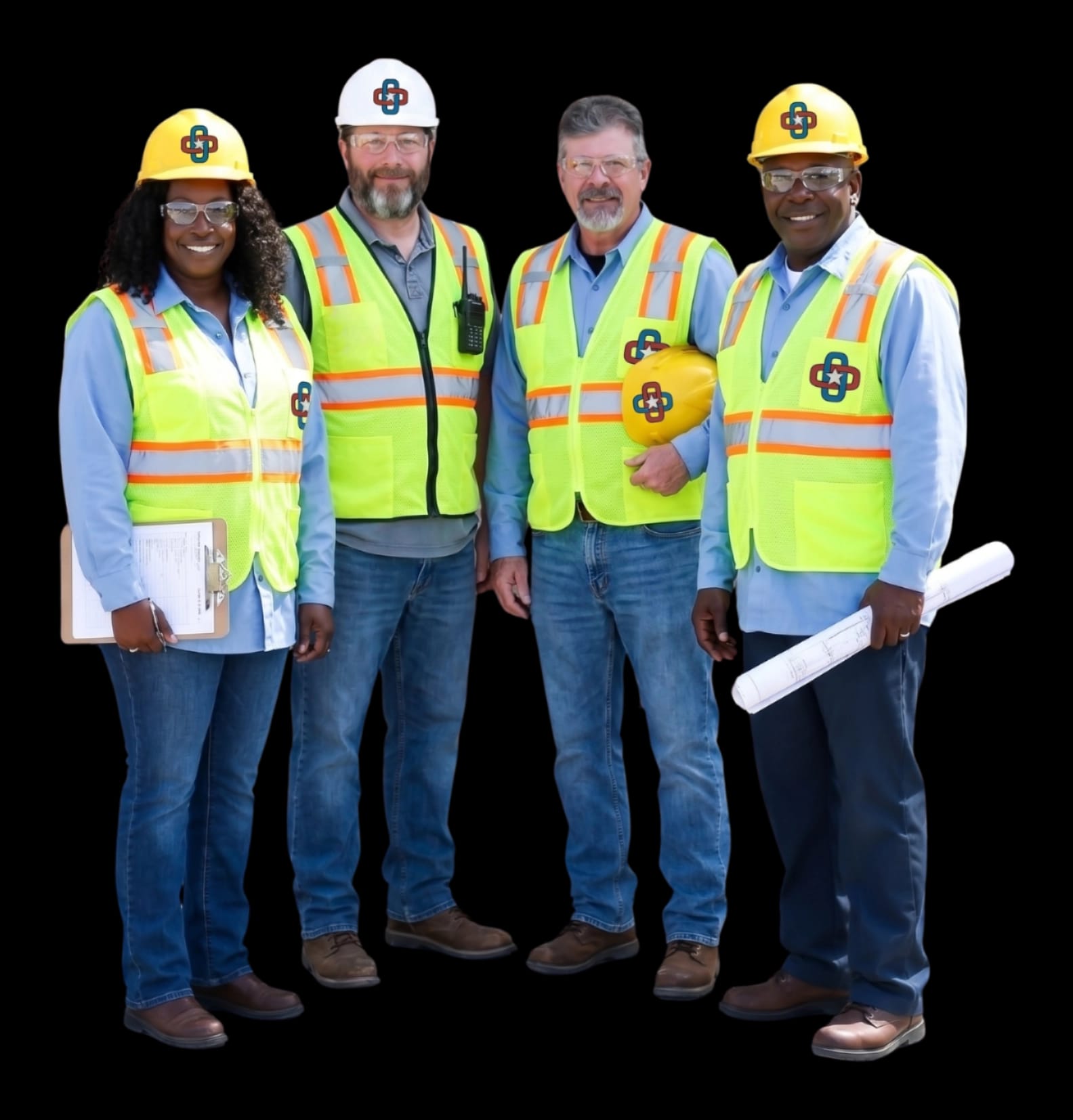
Training location
Training usually happens at your site. Need a classroom instead? Ask when you book and we'll arrange a location to host your crew.
WHAT WE DO
Training your people remember
Onsite safety training and safety meetings at your facility, built around your equipment, your procedures, and the hazards your people face. Most courses are customized for your site and built around the OSHA training requirements for the topic. Forklift, MEWP, confined space, excavation competent person, fall protection, CPR and first aid, and more. If it is in safety, we probably train on it. Ask if your topic is not listed.
What makes it stick is the instructor. We hire on character and delivery: people who can tell stories, adjust to the room, and bring real examples for the group to interact with. Training near the coast might cover jellyfish stings in first aid. Landlocked Idaho skips that one.
For CPR and first aid we align with HSI-authorized programs. Other curricula are matched to your operation. You get training records for every attendee. CPR, first aid, and OSHA 10/30 come with a course card. Classes run on site at your facility: you provide the equipment for operator evaluations, and there are no public classes.
NATIONWIDE
We come to you, wherever the work is
We travel throughout the United States, anywhere you need us. If your job sites move from project to project, training can follow them: we schedule around mobilization and new crews, and keep records consistent across every job. Companies with several facilities or worksites can train at every site.
ON-SITE COURSES
Train your whole crew at your site, on your conditions
Sending one person to a public class covers that person. We train your whole crew at your site, on your equipment and your conditions, and you keep the records.
Powered equipment
Forklift and MEWP are the two trainings crews most often miss.
Forklift operator
Hands-on training and evaluation on your equipment, at your site. You keep the records. Authorization is for your site, not a portable license.
Aerial lift / MEWP
Same approach on your scissor, boom, and aerial lifts. Operators need training and evaluation even though these are some of the smallest machines on site.
Confined space & heights
Programs sized to your spaces, systems, and roles.
Confined space
Entry, attendant, and rescue roles sized to your spaces and the people who need to be qualified.
Fall protection: authorized users
Harnesses and systems taught for the people who use them on your work. Competent-person level is covered under Competent person training below.
View course →Machinery & hazardous energy
Guarding and lockout/tagout for production equipment and energy control.
Machine guarding & lockout/tagout
Guarding awareness plus authorized and affected LOTO training built around your equipment and energy-control procedures.
Health & emergency
Fit testing, first aid, and readiness for the people on your floor.
Respirator fit testing
Qualitative and quantitative fit testing available. Medical evaluation is arranged separately and is not performed as part of the fit-test class.
CPR & first aid
Adult first aid, CPR, and AED aligned with HSI programs. Class size caps at a 12:1 student-to-instructor ratio. Students receive a course card from First Link Safety.
Competent person training
Employer-designated competent person roles for excavation, fall protection, and electrical safety.
Excavation competent person
Soil classification, protective systems, and daily inspections for the people who run your trenches.
Fall protection competent person
Competent-person level for Subpart M / Z359 work.
View course →Electrical competent person
Electrical safety for unqualified persons and competent-person scope. Not electrician, QEW, or NFPA 70E training.
FULL LIST
Other courses we deliver on site
In addition to the courses listed above, we also deliver the following on site. Ask if your topic is not listed.
- Powered equipment & material handling: Powered pallet jack, skid steer, backhoe/loader, ATV/UTV, forklift-pedestrian safety, loading dock and dockboard, hand and power tools, forklift refresher and re-evaluation, forklift train-the-trainer
- Cranes, rigging & lifting: Rigging and signal person, overhead/bridge crane, digger derrick, service truck crane
- Fall protection & heights: Fall rescue / suspension trauma, ladder safety, walking-working surfaces, supported scaffolding competent person
- Excavation & trenching: Excavation worker, soil classification
- Confined space: Authorized entrant, attendant, entry supervisor, atmospheric monitoring, non-entry rescue, awareness, confined space competent person
- Hazardous energy & machinery: LOTO refresher and periodic review, jam-clearing and changeover, sanitation and maintenance energy control
- Hazardous materials: HazCom / GHS / SDS
- Occupational health: Respiratory protection user training, hearing conservation, bloodborne pathogens, silica, heat illness, cold stress, ergonomics and safe material handling, combustible dust, benzene awareness, construction health hazards
- Emergency & medical: Pediatric first aid / CPR / AED, BBP with first aid, emergency action plans and evacuation, fire extinguisher (hands-on)
- OSHA outreach & recordkeeping: OSHA 10 / 30 Construction, OSHA 300 recordkeeping, OSHA inspection readiness, incident and near-miss investigation, JHA/JSA
- Driver & fleet: Defensive / fleet driver safety
- Supervisor & program leadership: Supervisor safety responsibilities, safety committee, safety inspections and audits, temporary-worker safety, site-specific new-hire orientation, safety leadership and accountability
IN THE CLASS
How we lead
In the room
What makes the class stick beyond the slides.
In the room
What makes the class stick beyond the slides.
In the class
Class size · Room to learn
We aim for about 10 learners on skills-heavy courses. Smaller groups mean more seat time and Q&A. CPR caps at a 12:1 student-to-instructor ratio.
Excavation · Soil in the room
We bring soil samples into class so people can see and feel what Type A, B, and C look like, not just read percentages on a slide.
Scenarios · Where you work
We adjust examples to the site. First aid near the coast might cover jellyfish stings. Landlocked Idaho skips that one.
Outreach and meetings
OSHA Outreach Construction, plus meetings that can scale.
Outreach and meetings
OSHA Outreach Construction, plus meetings that can scale.
In the class
OSHA 10 and 30 · Construction outreach
We are OSHA-authorized to deliver the 10-Hour and 30-Hour Construction courses. Students receive an official OSHA student completion card. Outreach is voluntary and does not by itself satisfy a standard training requirement.
Toolbox talks · All-hands scale
Safety meetings and toolbox talks can scale to hundreds. Hands-on courses stay small.
In the class
In the room
Class size · Room to learn
We aim for about 10 learners on skills-heavy courses. Smaller groups mean more seat time and Q&A. CPR caps at a 12:1 student-to-instructor ratio.
Excavation · Soil in the room
We bring soil samples into class so people can see and feel what Type A, B, and C look like, not just read percentages on a slide.
Scenarios · Where you work
We adjust examples to the site. First aid near the coast might cover jellyfish stings. Landlocked Idaho skips that one.
In the class
Outreach and meetings
OSHA 10 and 30 · Construction outreach
We are OSHA-authorized to deliver the 10-Hour and 30-Hour Construction courses. Students receive an official OSHA student completion card. Outreach is voluntary and does not by itself satisfy a standard training requirement.
Toolbox talks · All-hands scale
Safety meetings and toolbox talks can scale to hundreds. Hands-on courses stay small.
HOW IT WORKS
From your topic list to training on file
Step 1: Tell us what you need
Topics, headcount, and your schedule. The course list keeps growing. Ask if your topic is not listed.
Step 2: Schedule on site
We run classes at your facility. You provide the equipment for operator and MEWP evaluations. Scenarios adjust to where you work.
Step 3: Train and document
You get training records for every attendee that your GC or corporate safety group can file. CPR and OSHA 10/30 students also receive a course card.
Toolbox talks and all-hands meetings can scale to hundreds. Skills courses stay around ten people so everyone gets time on the equipment.
FAQ
Common questions
Can I sign up as an individual?
No. We train your people at your site. There are no public classes and no individual open enrollment.
What do attendees receive?
Training records for every attendee. Courses are customized to your site and built around the OSHA training requirements for the topic. They are not typically a portable credential. Forklift and MEWP operators are trained and evaluated on your equipment so you can authorize them for your workplace. CPR and first aid students receive a course card from First Link Safety. OSHA Outreach students receive an official OSHA student course completion card.
Is OSHA Outreach the same as a certification?
No. The OSHA Outreach Training Program is voluntary, is not a certification program, and does not by itself satisfy any OSHA standard’s training requirement. Students still receive an official OSHA course completion card.
Where do classes happen?
At your facility, anywhere in the United States. We are headquartered in the Boise area and travel to your sites on your schedule.
How large are class sizes?
Some courses follow ratio rules (CPR caps at 12:1). We aim for about 10 learners on skills-heavy courses so people get seat time and Q&A. Toolbox talks and all-hands meetings can scale much larger.
RELATED
Related services
Pair this engagement with the rest of your safety program.
Safety manuals & plans
Programs, EAPs, and site-specific docs, built and kept current.
View service →Site safety staffing
Full-time safety pros on your jobsite, from gap coverage to multi-year programs.
View service →Safety audits & inspections
Structured site audits with clear findings your team can act on.
View service →Need training that sticks with your people?
Tell us the topics, headcount, and when you need the class. We will size it and schedule around your site.